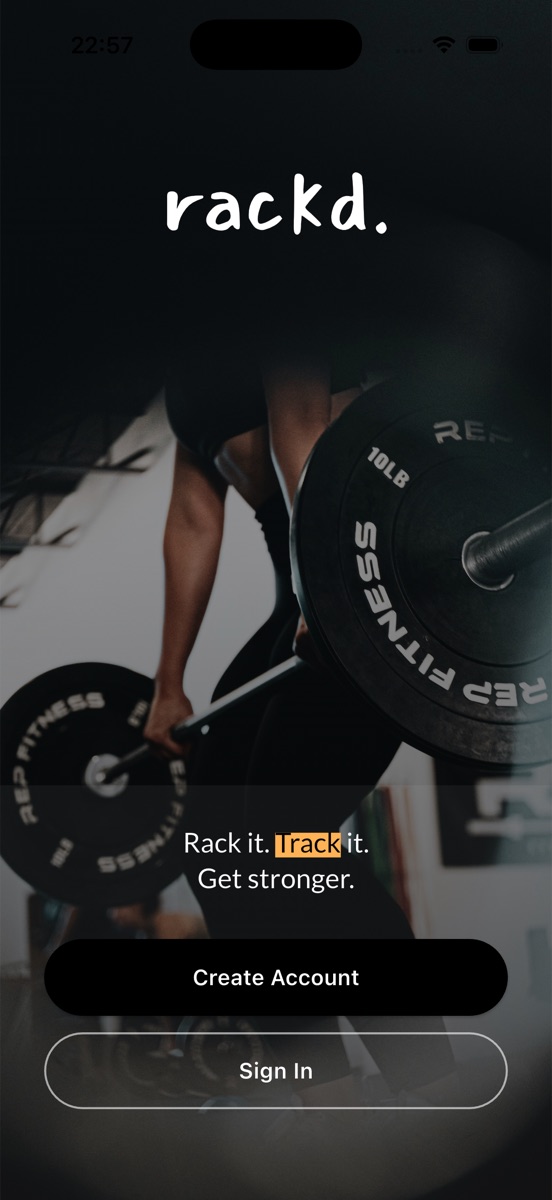
rackd.
Anyone can go to the gym. Training is the part where it adds up.
You will not remember what you lifted last Tuesday. You will not know whether this month was harder than last, or which muscles you have quietly avoided since spring. rackd. does. Rack your weights, track your reps, get stronger.
Built female-first.
Made for everyone.
Almost every fitness and health app was designed around a body that does not have a cycle, then handed to everyone else with the colours changed. rackd. starts from the other end.
Your energy in week one is not your energy in week three. And if that is not you, it stays switched off — underneath, rackd. is a serious training log for anybody.
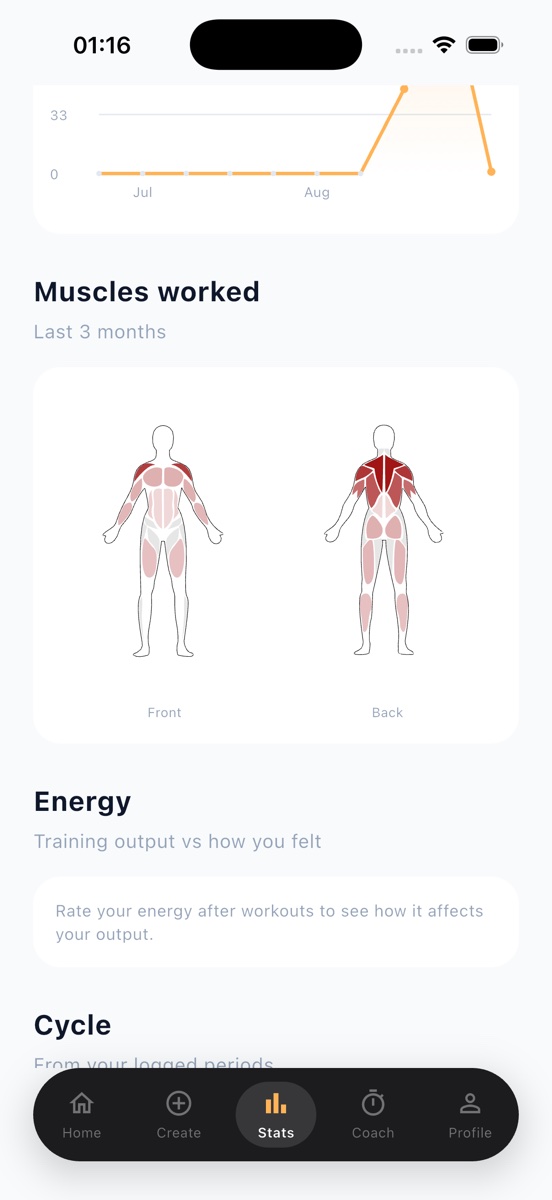
See what you have actually trained.
Not a list of dates. A body, shaded by how much work each muscle has taken. The ones you keep coming back to, and the ones you have been skipping, are obvious in a second.
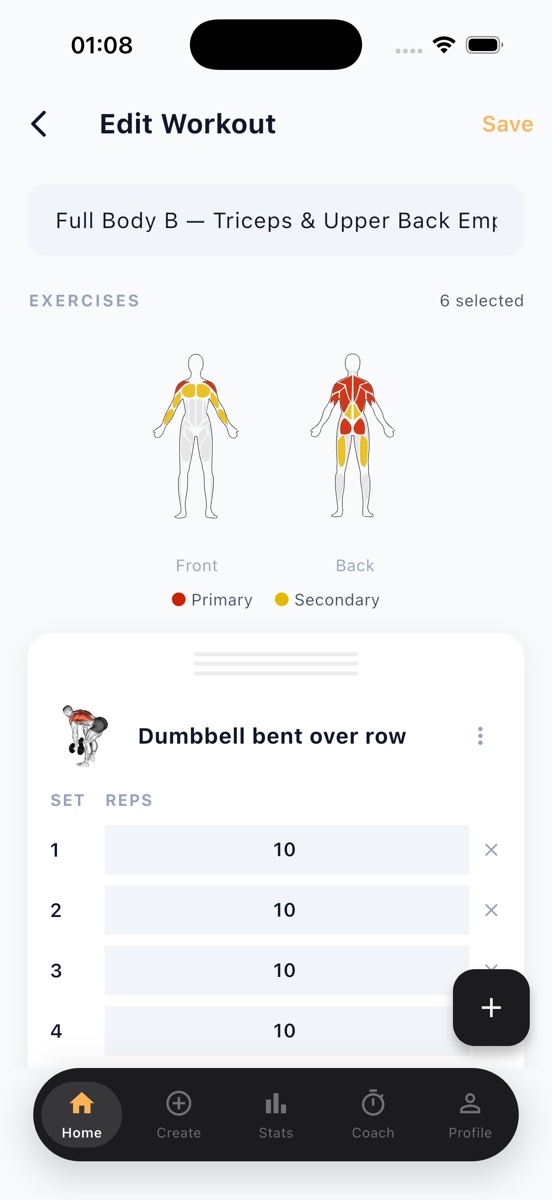
Balance the session before you do it.
The same map sits inside the workout builder and fills in as you add movements, so you can see the session is all push and no pull before you have lifted anything.
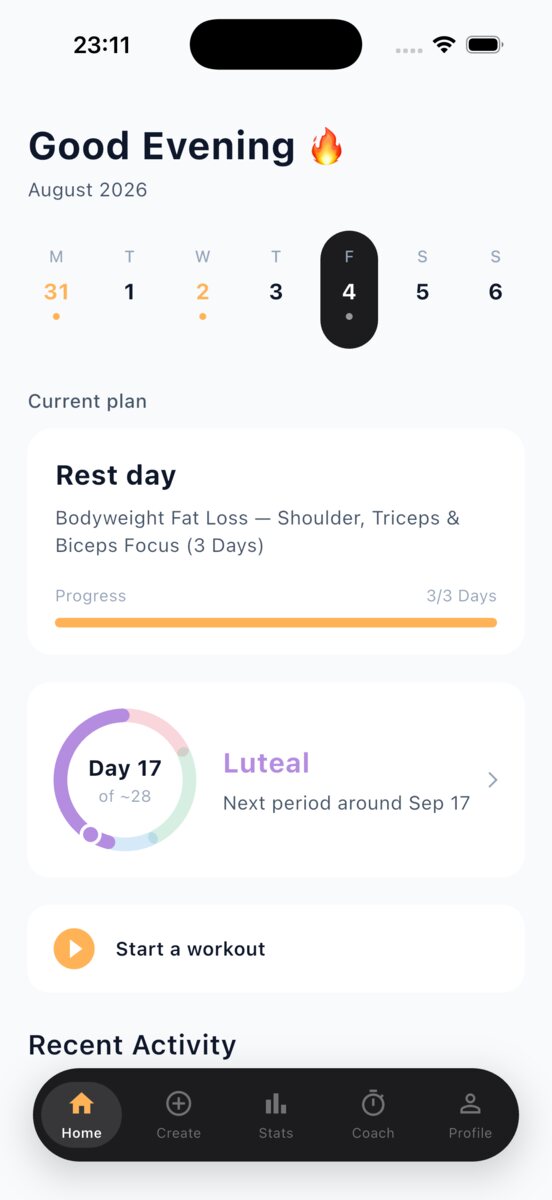
Train with your cycle, not against it.
The bar across the top of this page is a 28-day cycle, drawn to scale — the four phases rackd. tracks, in the colours it draws them in.
Open the app and today's phase is already there. Behind it, how your energy has actually run across your last few cycles, set beside what you lifted. Your data, about you.
A plan, without doing the planning.
Say what you are training for, what equipment you can reach and how many days you actually have. Get back a structured plan built around all three. No spreadsheet, no forum thread at midnight.
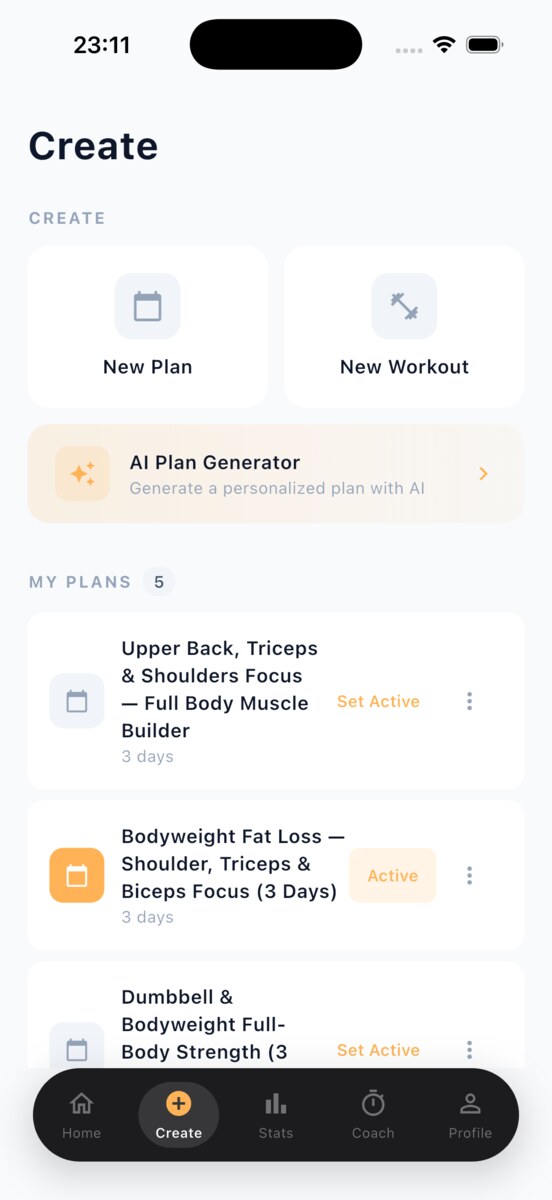
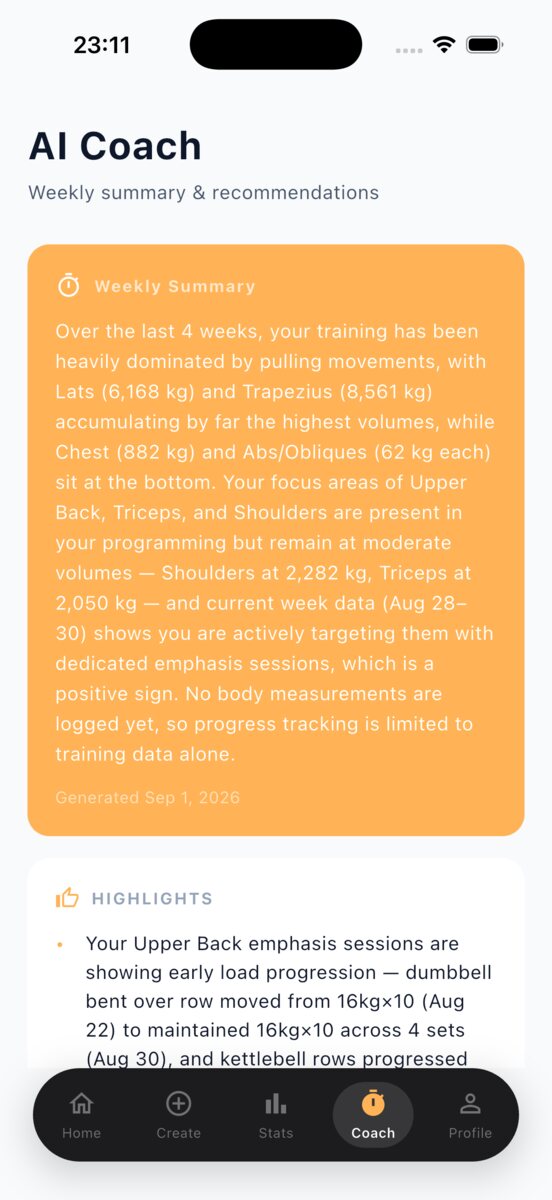
Someone who read your logbook.
Every week, a written read on what you have been doing: what is progressing, what has stalled, and what you have been avoiding. It works from your sessions rather than a template.
Consistency is the only requirement.
First session or tenth year. Female and male. A home gym, a commercial gym, or a set of dumbbells in a spare room.
- Offline
- Written to your phone first, synced when you are back online.
- Library
- Every movement demonstrated, searchable by muscle and equipment.
- Progress
- Measurements and history over time, not one number on a scale.
- Your call
- Cycle tracking is opt-in, and stays under your control.
In development — releasing on the App Store and Google Play.